What is an AI SDR? A complete, honest guide
Reviewed and updated
 Playbook · AI SDR
An AI SDR (AI sales development representative) is software that automates selected sales-development tasks. Products vary widely: some research accounts, some draft outreach, some run voice conversations, and some update lead records or book meetings. No buyer should assume one product performs the entire motion without checking its published scope.
The job an SDR actually does
Strip away the title and a sales development rep does five things, over and over. Every one of them is pattern work with a clear success signal — which is exactly the shape of work AI is good at.
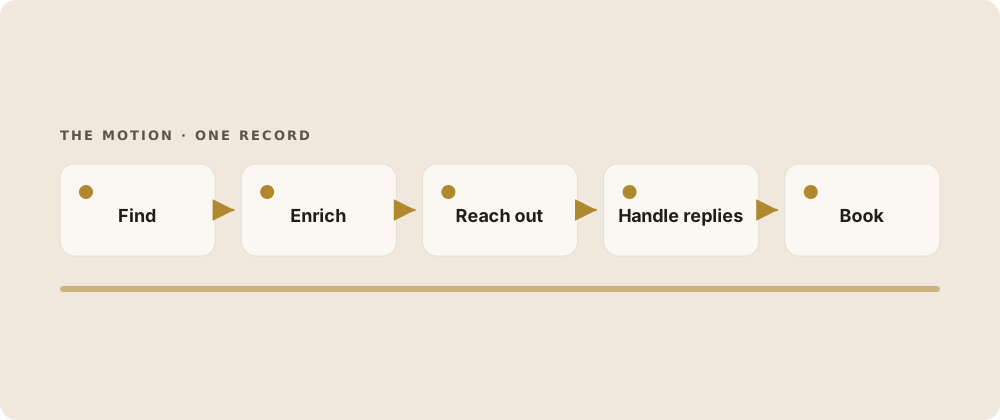
- Find accounts that look like your best customers.
- Enrich them — the right contact, email, phone, and a reason to reach out.
- Reach out across email, phone, and social, in sequence.
- Handle replies — qualify, answer the obvious questions, and route the rest.
- Book the meeting and hand a warm context note to the closer.
What makes it "AI", not just automation
This is the distinction that matters, because the market is full of old automation wearing an AI badge. Rules-based automation fires the same template at everyone on a fixed cadence — it's a mail-merge with a timer. An AI SDR reads each account, drafts outreach specific to it, adapts the follow-up to what the prospect actually did (opened, clicked, replied, went quiet), and knows when to stop. The difference is judgment applied per-contact at scale, not a static drip.
Where an AI SDR can help
After a controlled pilot, automation can help with the parts of the funnel that are volume × consistency:
- Consistent execution. A configured workflow can apply the same approved steps across eligible leads.
- Faster response. Automated intake can reduce delay, although actual timing depends on providers, capacity and network conditions.
- Supported activity logging. Configured actions can update the lead record as they happen.
Results still depend on data quality, workflow design, provider reliability and human review of higher-risk actions.
Where a human still wins
Humans still lead complex, multi-threaded deals, relationship building and unusual decisions that do not fit a tested pattern. The practical goal is to automate selected repeatable work and preserve human judgment for the moments that need it; the share that can be automated varies by business.
How to evaluate one
If you're weighing an AI SDR, pressure-test it on four things:
- Does it run the whole motion, or one slice? A tool that only writes emails still leaves you stitching find, call, and CRM together by hand.
- Where does the data live? If it works off its own copy of the customer and syncs back later, you'll inherit drift and latency.
- How much control do you get? You should be able to set how much autonomy it has, per workflow — not flip one master switch.
- Is it honest about limits? The right answer to "can it close complex deals?" is no. Be wary of anything that says yes.
How Culvion approaches it
Culvion's published foundation combines configured Voice conversations with the Lead Management System on One Record™. Lead Finder, email, additional channels and external integrations are early-access or scoped and must be confirmed before purchase. For supported actions, Auto / Ask / Ping sets whether Nate acts, waits for approval or alerts a person.
The takeaway: an AI SDR is best understood not as a robot rep but as a way to support selected repeatable work and reduce dropped follow-ups inside a configured scope — while people retain the decisions that need human judgment. Want to evaluate it on your funnel? Book a demo or explore the AI Team.