The self-updating lead management system: when the record does the work
Reviewed and updated
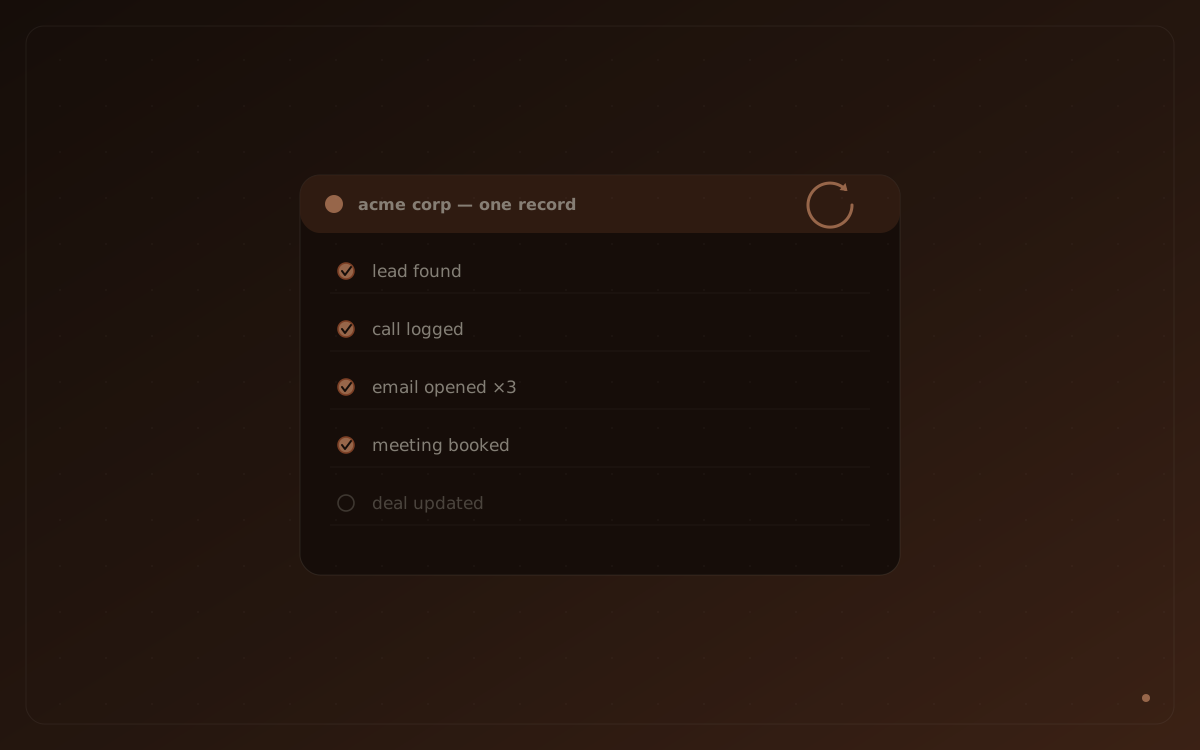 Product · One Record
Ask any sales leader about their CRM data and you'll hear the same sigh. It was accurate at kickoff. Six months later it's a museum of half-finished deals, stale stages, and contacts nobody has touched since spring. This isn't a discipline problem. It's a design problem.
Why lead records rot
A traditional lead record is a filing cabinet: it only knows what a human types into it. But the human doing the selling is on calls, in the inbox, chasing the next meeting — and updating the record is the chore that gets done last, badly, or never. The information exists; it just lives in the rep's head, their sent folder, and a call they'll "log later." The cabinet was never where the work happened, so it was always a step behind reality.
Every fix aimed at this problem — reminders, mandatory fields, "update your pipeline before Friday" — is really just asking humans to do more manual entry. It treats the symptom. The disease is that recording the work and doing the work are two separate jobs.
What "self-updating" actually means
A self-updating record collapses those two jobs into one. When the same system that makes the call is the system that stores the call, there's no logging step — the log is a byproduct of the action. Send the email, the record shows it. Book the meeting, the stage moves. A reply comes in, it's attached to the contact, tagged, and routed. Nobody has to update a separate system because the lead management record is where the work happens.
The tell is simple: if your lead record can be "out of date," it isn't self-updating. A record that does the work can't fall behind the work.
What changes for the people who use it
For reps
The nightly data-entry tax disappears. The pipeline is accurate because it was never hand-maintained — it reflects what actually happened, in real time. Reps spend their hours selling, not narrating what they sold.
For managers
The forecast stops being fiction. When every stage change is tied to a real event — a call that happened, an email that landed, a proposal that was viewed — the pipeline is evidence, not optimism. You can coach on what's real instead of interrogating reps about what's in the system.
For the company
The customer record becomes an asset you can trust enough to act on automatically — the foundation for everything from routing to risk alerts to clean reporting. Garbage in, garbage out cuts both ways: trustworthy data is what lets the rest of the automation be trustworthy too.
How Culvion does it
In Culvion's published foundation, configured Voice activity and Lead Management updates can share One Record™. Other modules, channels and external CRM connections require confirmed scope, permissions and reconciliation rules. The design goal is to make a supported activity update the record as part of the same workflow, rather than promise that every module is already connected.
The takeaway: stop asking your team to keep lead records current. Make the system that does the work the system that records it, and "up to date" becomes the default instead of the goal. Explore the AI Lead Management System, or book a demo.